Maison Numéro 20
Two focused working sessions applied the system to a live hospitality competition proposal. The proposal was developed through the new workflow, won the competition and the studio continued using the methods independently.


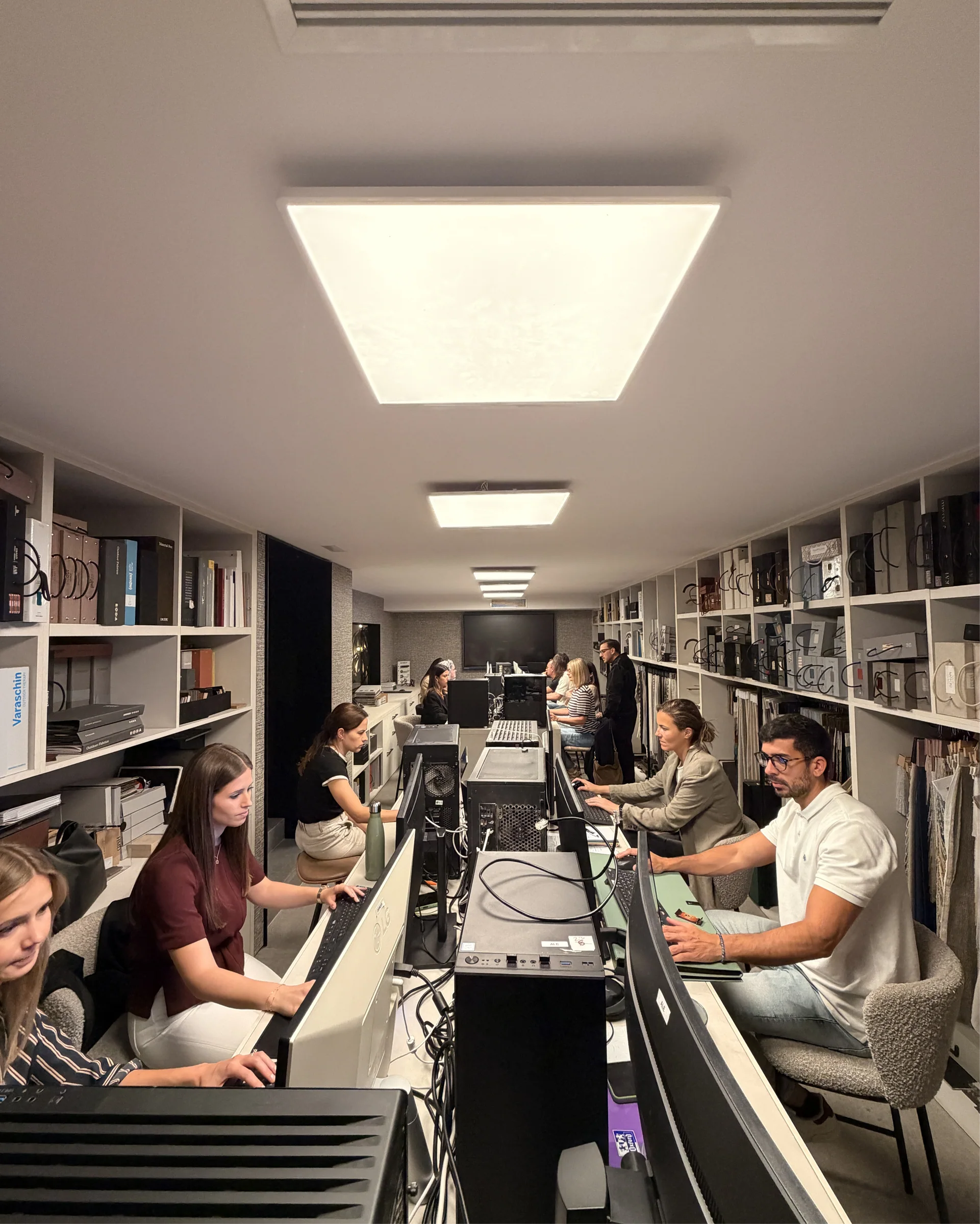
We design and install AI systems for architecture and interior design studios, applying them to live projects and working alongside the team until the capability becomes part of daily practice.
FORZ connects project structuring, concept development, multimodal iteration, visualisation and internal knowledge. The result is greater creative range, faster decisions, more consistent output and less time spent on repetitive production.
Identify where AI can create meaningful creative and operational value.
Organise briefs, references, information and communication into a clearer working process.
Explore and refine multiple design directions while maintaining creative control.
Connect floorplans, sketches, models, renders, photographs and references within one fluid process.
Install reusable workflows, templates, knowledge libraries and bespoke assistants aligned with the practice.
Train the team through live projects and support the capability until it becomes part of everyday work.
The work is installed through current projects rather than separated from practice. Every stage leaves a usable layer inside the studio.
Understand the studio, its projects, workflows and priorities.
Prepare the tools, references, assistants and working environment.
Introduce repeatable workflows for design, visualisation and operations.
Use the system with the team on current projects and real briefs.
Review adoption, refine the workflows and build internal autonomy.
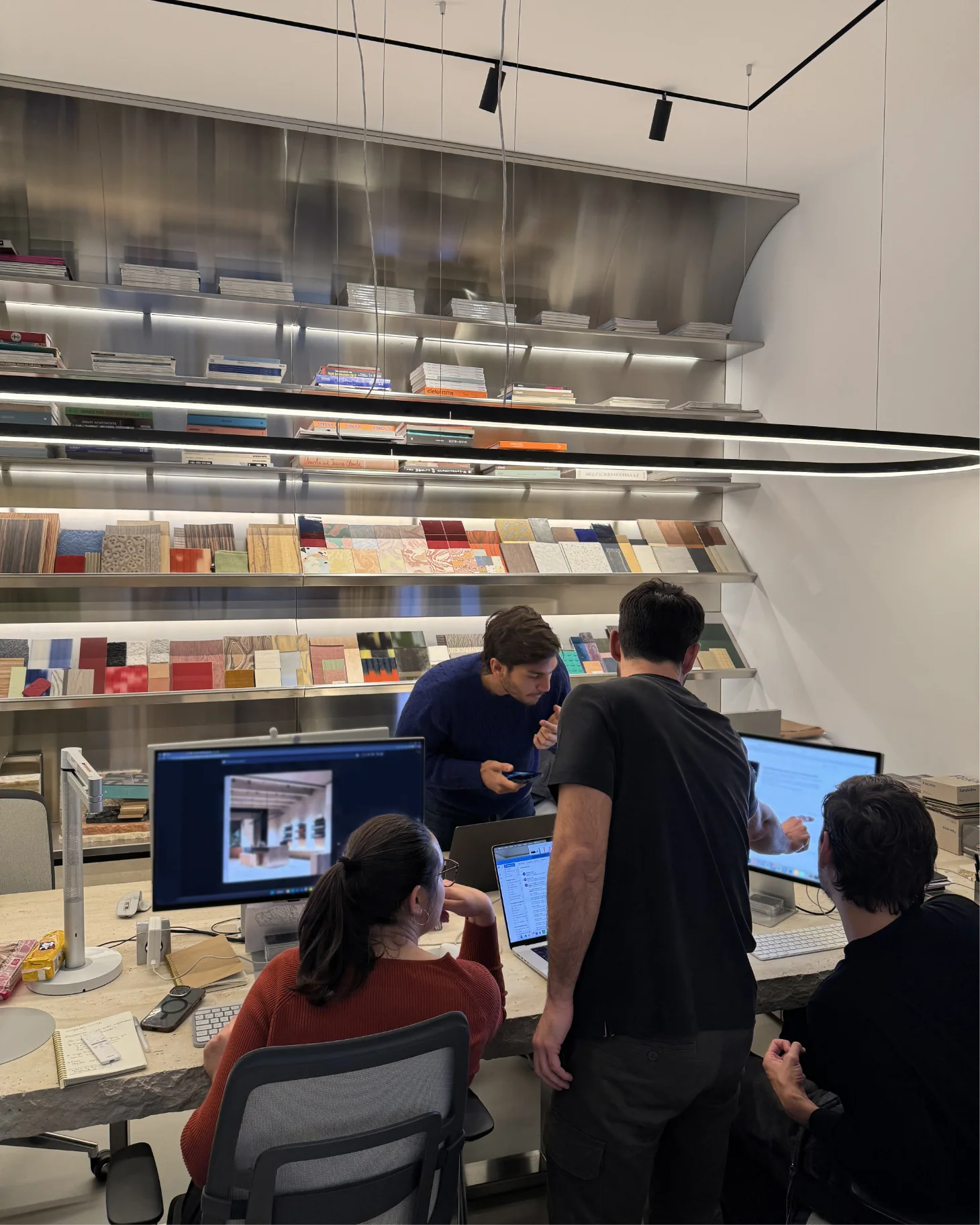
AI systems applied with architecture and interior design teams across live hospitality, residential and workplace projects.
Two focused working sessions applied the system to a live hospitality competition proposal. The proposal was developed through the new workflow, won the competition and the studio continued using the methods independently.
The team advanced a large luxury residential development alongside several active residential and workplace projects, increasing the speed and breadth of iteration without separating training from delivery.
Ten team members applied AI across ten active projects, supported by a bespoke in-house studio assistant and working standards developed around their practice.







A configured working environment, reusable workflows, a structured knowledge base, a bespoke studio assistant where useful, and a team able to apply the system to its own projects.
Both, in sequence. We diagnose the studio, design and install the system, apply it to live projects and train the team through the same work.
No. We begin from the team’s current capabilities and assign workflows according to roles. The aim is useful adoption, not software proficiency for its own sake.
References, review criteria, examples and decision rules are configured around the studio’s standards. Creative authorship remains with the team.
We define relevant baselines such as iteration time, number of directions explored, production effort, consistency and adoption across live work.
The studio keeps the installed system and documentation. Follow-up reviews can refine workflows, solve new use cases and support internal autonomy.
What could your studio do with this capability in place?